A Modular Lab for Thermal Management Research Needs an Accessible Utility Spine
Map instruments and their service envelopes
Thermal management research may use changing instruments, pumps, test rigs and measurement stations. Ask researchers to list utility demands and the clearance needed for setup, calibration and removal. The first layout should include a plausible replacement instrument, not only the current inventory. Keep fixed building connections distinct from distribution that can be altered within the room. A modular partition line should support the likely equipment path rather than form a narrow corridor that makes future moves expensive. Review noise, vibration and heat sources with the specialists responsible for the tests.
Place access where technicians can use it
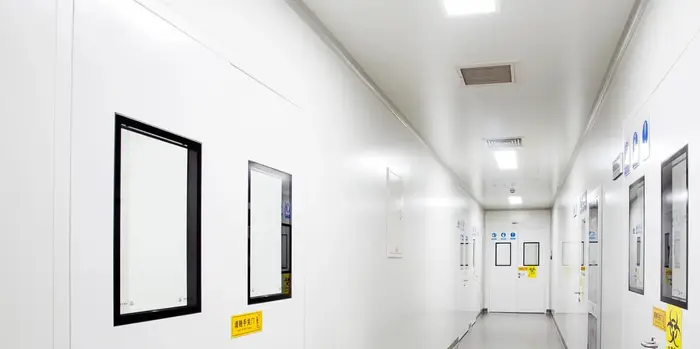
A utility spine can make change easier when valves, breakers and connection points are clearly labelled and reachable. It can also concentrate risk if service doors open into occupied work zones or a leak is concealed behind a permanent bench. Coordinate the spine with the wall grid and ceiling so a panel can be replaced without disconnecting unrelated equipment. Detail unused ports and future penetrations with a controlled closure method. The cleaning team should inspect the proposed junctions and floor edges. A full-size mock-up around a dense service bay is a practical way to check reach and visibility.
Document the next instrument swap
At handover, carry out a dry run of the most likely equipment change. Identify isolation points, removal route, temporary storage and the checks needed before tests resume. Record the as-built utility schedule and leave spare module details with facilities. A change to heat load or exhaust demand needs engineering review, even if the wall panels move easily. Agree who approves alterations to room conditions and who updates the drawings. The laboratory becomes adaptable when these decisions are repeatable and recorded, not simply when the partition catalogue offers several sizes. A modular laboratory project can illustrate coordinated off-site services; this modular lab still needs a dry run of its own instrument swap and utility isolation.
Decision record
Compare bids using a defined instrument-change scenario. Request prices for the initial spine, one additional connection, a moved wall bay and post-change inspection. Clarify what remains with the base building and what belongs to the modular room supplier. The operational advantage lies in shorter, better controlled alterations, provided access and documentation are designed from the first installation. A realistic scenario keeps flexibility from becoming an untested marketing claim.
The utility schedule should identify not just capacity but the person responsible for isolating each circuit. Place that information at the point of use and in the as-built file. During the dry run, have a technician locate the isolation without guidance from the installer; any hesitation identifies a labelling or access problem worth correcting.